Baking AO Maps on AI 3D Models for Real-Time Film Lighting
Optimizing Virtual Production Workflows with AI-Generated 3D Architecture
Virtual environments in film production demand absolute photorealism, creating an immense computational burden on real-time rendering engines.
Dynamic global illumination calculates complex light bounces, but relying strictly on real-time calculations often introduces severe frame-rate friction during LED volume shoots. Generating foundational structures through an AI 3D Model Generator accelerates the pre-production timeline, but these assets still require rigorous optimization for cinematic lighting.
By baking ambient occlusion maps directly onto AI-generated 3D architecture, technical artists can secure permanent, high-fidelity micro-shadows that drastically reduce hardware overhead. This methodology anchors virtual assets into cinematic environments with precision, solving the performance bottleneck without compromising visual depth.
Key Insights
- Pipeline Compression: Integrated AI platforms accelerate the 3D pipeline by up to 50 percent, allowing technical artists to bypass manual modeling and focus directly on lighting and rendering stages.
- Asset Preparation: High-fidelity ambient occlusion baking demands meticulous UV unwrapping and precise format selection to maintain architectural metadata across software ecosystems.
- Shader Integration: Multiplying baked occlusion data within real-time shader networks isolates micro-shadows, significantly lowering the GPU cost of dynamic lighting in virtual production volumes.
- Hybrid Rendering Optimization: Balancing baked maps for static architectural elements with real-time ray tracing for dynamic subjects ensures maximum frame rates during live-action camera tracking.
The Role of AI-Generated Geometry in Modern Virtual Production Lighting
In 2026, Tripo AI generates complex architectural geometry that serves as the foundation for realistic light occlusion. This section explores how AI-driven 3D structures interact with real-time engines to establish visual depth.
The 3D creation pipeline is evolving rapidly as newer, integrated platforms emerge to combine AI-assisted generation, optimization, and rendering into cohesive workflows. By focusing creative energy on high-value artistic decisions rather than manual technical construction, film studios drastically reduce pre-production timelines. In recent industry applications, Tripo AI enables creators to accelerate the entire 3D pipeline—encompassing modeling, texturing, retopology, and rigging—by up to 50 percent.
Preparing Tripo AI Models for High-Fidelity AO Map Baking
High-quality baking requires optimized mesh data and clean UV coordinates. Refining Tripo-generated architecture involves meticulous mesh density management.
Ensuring Clean UV Layouts for AI-Generated Architectural Structures
Before any light data can be baked, the AI-generated mesh must possess a flawless UV layout. Ambient occlusion baking relies heavily on unique texture space; overlapping UV islands will cause shadow data from one architectural feature to bleed onto another. Technical artists must carefully unwrap Tripo AI models, ensuring that seams are hidden along structural edges and that texel density is distributed evenly across the geometry.
Format Selection: Utilizing USD and FBX for Professional Film Pipelines
The primary formats utilized across these specialized workflows include USD, FBX, OBJ, STL, GLB, 3MF. For high-end virtual production, the Universal Scene Description (USD) format is paramount. During this handoff phase, specialized 3D format conversion pipelines ensure that the mesh normals, smoothing groups, and UV metadata remain intact.
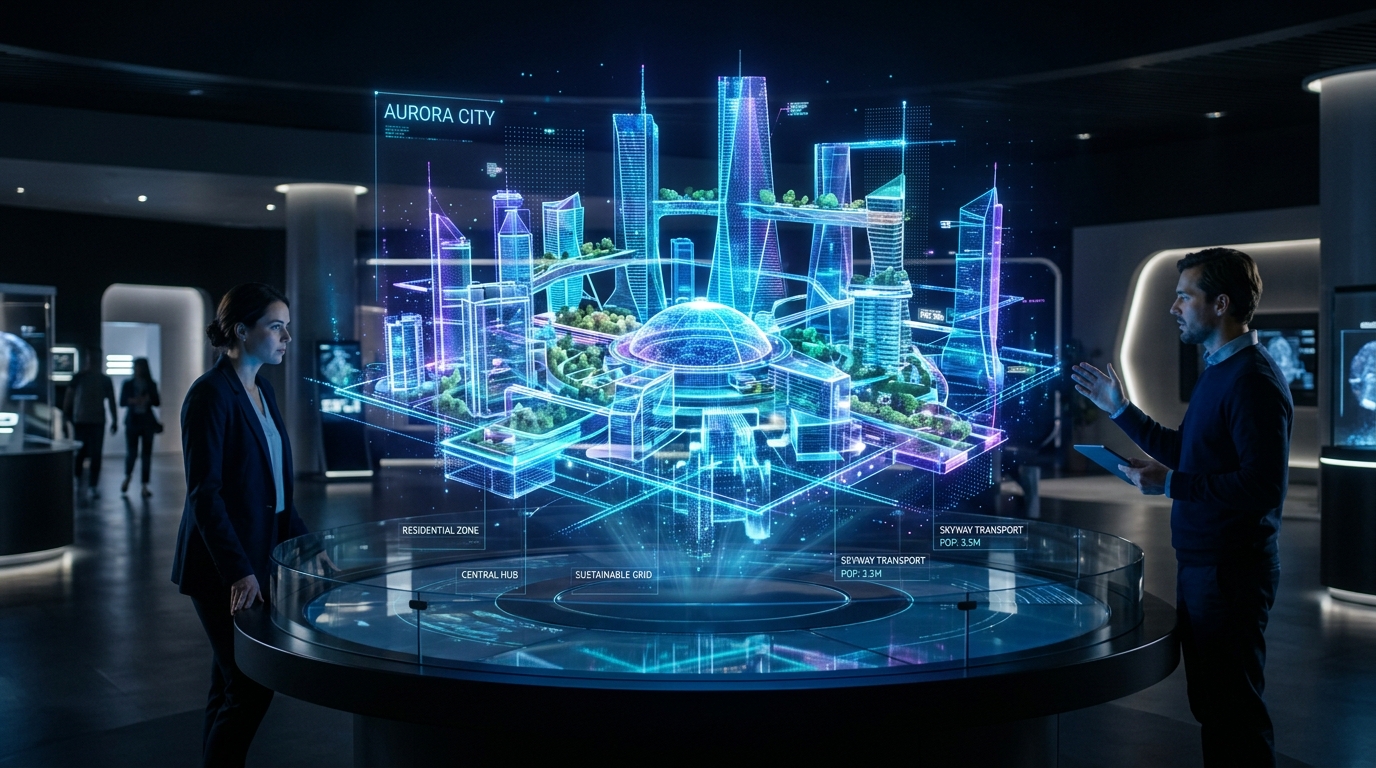
Step-by-Step Workflow: Baking AO Maps for Real-Time Cinematic Lighting
Configuring Ray-Traced AO Settings for Fine Architectural Details
While rasterization is faster, ray tracing is far more physically accurate for generating ambient occlusion maps. When configuring the bake settings, artists must calibrate the maximum ray distance. Sample count is another critical parameter; film-grade assets require high sample counts to eliminate noise in the baked texture.
Resolving Topology-Induced Artifacts in AI-Generated Meshes
Even with optimized topology, AI-generated structures may occasionally present shading artifacts. These typically manifest as harsh black lines along concave intersections. Artists must manually unify normals across flat architectural surfaces and split normals at 90-degree corners to ensure the baker interprets the volume correctly.
Integrating Baked AO into Real-Time Shader Networks for Film
To utilize the baked AO map effectively, technical artists wire the AO map into the specific occlusion input of the engine's physically based rendering (PBR) shader. Advanced 4K texture generation workflows rely on these baked maps to modulate specular highlights and diffuse reflections. This process grounds the AI-generated architecture, making it appear physically present within the scene.
Performance Optimization: Baked AO vs. Real-Time Ray Tracing
In LED volume production, maintaining a locked frame rate that synchronizes with the physical camera's shutter is non-negotiable. To optimize performance, virtual art departments utilize a hybrid approach. Large, static AI-generated architectural elements are assigned baked AO maps. This eliminates the need for the engine to calculate millions of occlusion rays for environments that do not deform or move, reallocating GPU overhead to dynamic elements.
FAQ
How does AI-generated architectural topology affect AO bake quality?
Tripo AI's mesh density directly influences the smoothness of baked shadows. Insufficient polygonal density can cause faceting in the occlusion gradients. Technical artists must clean up concave corners and unify vertex normals to prevent harsh, artificial lines.
Which file format is ideal for preserving AI mesh metadata during the baking process?
For complex film pipelines, the USD format is highly recommended as it preserves intricate scene description data and material definitions. For standard real-time engine compatibility, FBX remains a robust format for retaining smoothing groups and UV layouts.
Can baked AO maps replace real-time Ray-Traced Ambient Occlusion (RTAO) in film?
Baked AO maps cannot entirely replace RTAO for moving objects, but they are essential for static geometry. Film productions utilize a hybrid approach: baking AO onto static Tripo AI architecture while using RTAO for moving actors and interactive props.