Tripo DCC Bridge for Unreal Engine: Installation & Quick Start
Tripo3D Unreal Engine Bridge is a lightweight plugin that connects Unreal Engine directly to the Tripo Studio frontpage.
With this bridge, you can send generated models from the browser straight into your Unreal project in real time—no manual downloads or imports required. It streamlines the workflow for artists and game developers, allowing you to focus on scene building and gameplay instead of file handling.
Requirements
OS: Windows
Unreal Engine: 5.4 or newer UE 5.7+ is recommended.
Browser:
Supports Google Chrome 116+, Edge 116+, Opera 102+
Other browsers are not supported
Default Import Settings:
Pivot: Center Bottom
Texture Resolution: Current Maximum
Auto Material Creation: Enabled
Auto Asset Placement: Enabled
Step-by-Step Installation
Step 1:
Go to Tripo Studio and download the Tripo3D Unreal Engine Bridge package.
Step 2:
Extract the ZIP file.
Select the plugin version that matches your Unreal Engine version.
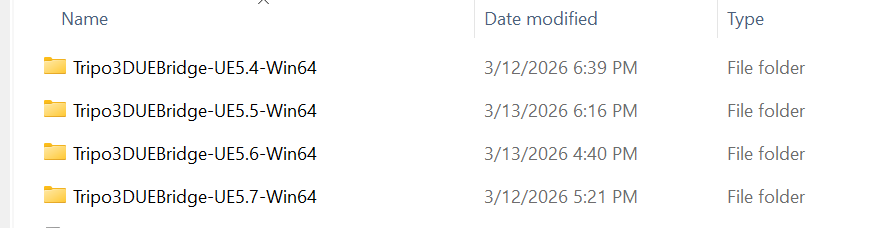
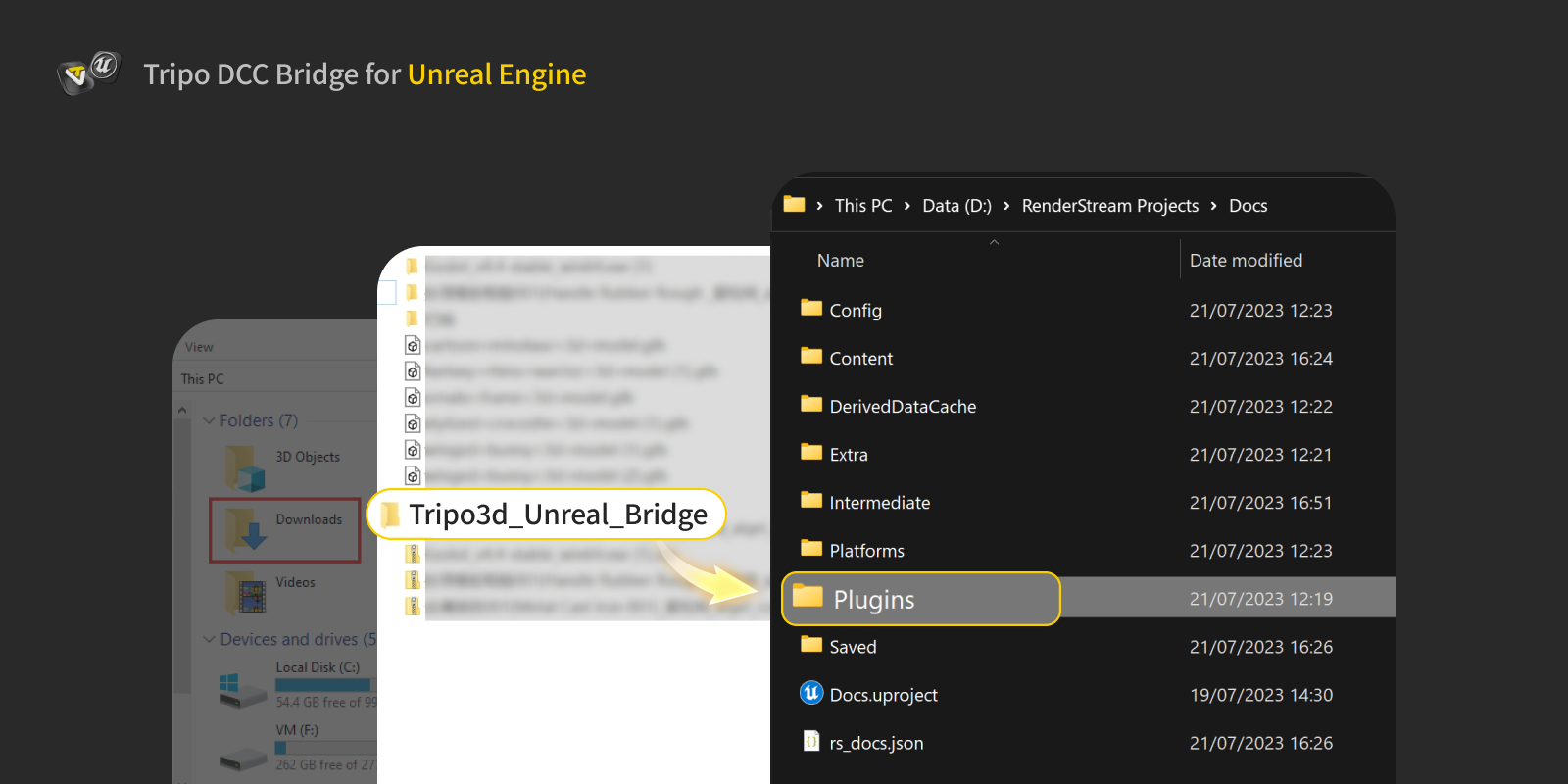
Copy the plugin folder into your Unreal project's Plugins directory.
If the Plugins folder does not exist, create one in the root of your project.
Step 3:
In Unreal Engine, open the Tripo Bridge panel via Window → Tripo Bridge.
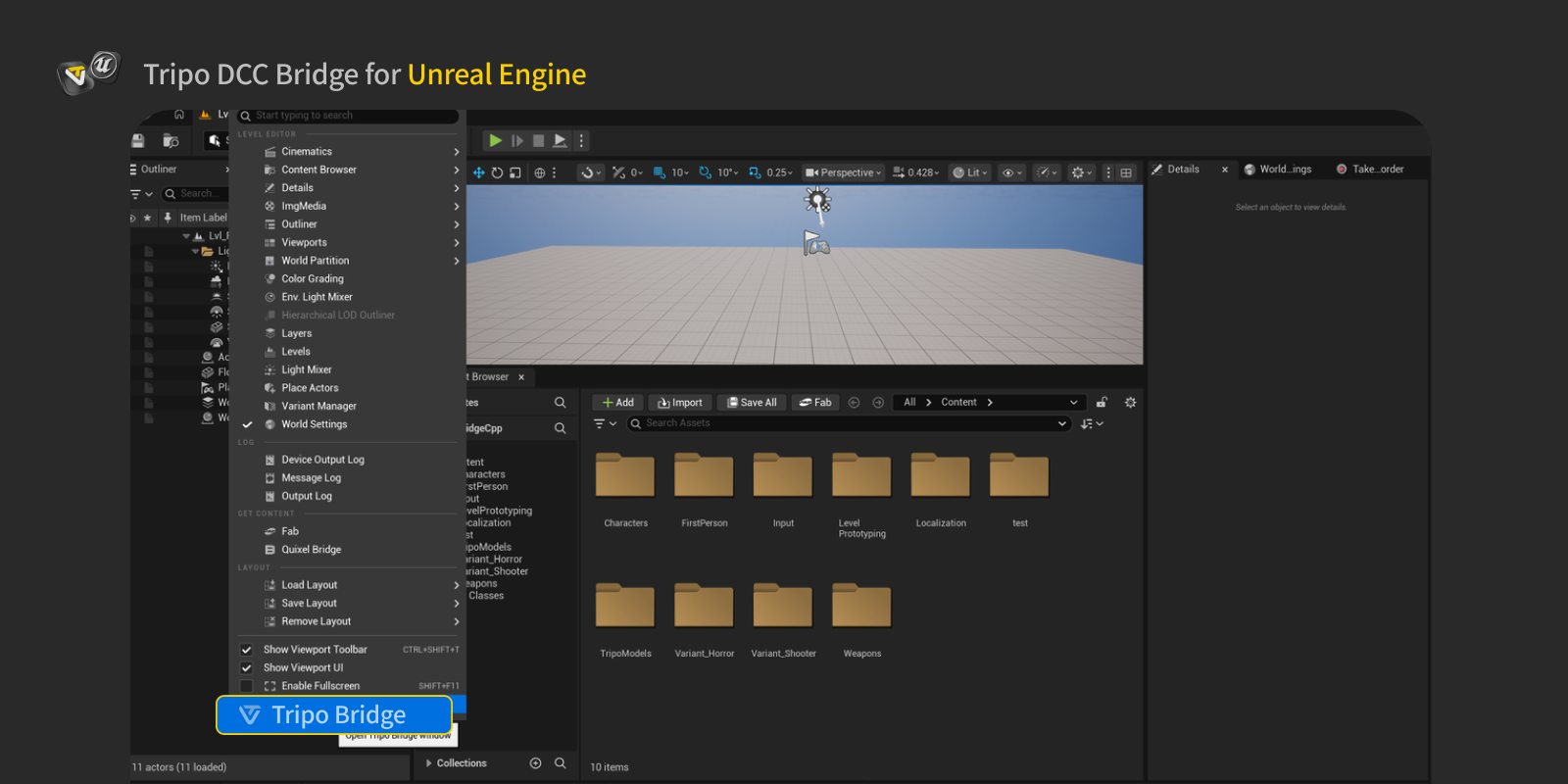
Open the Bridge panel.
When the panel is opened, the Bridge service starts automatically.
The Bridge service must remain running while connecting to the web browser.
Do not close UE or the Bridge panel during model transfer.
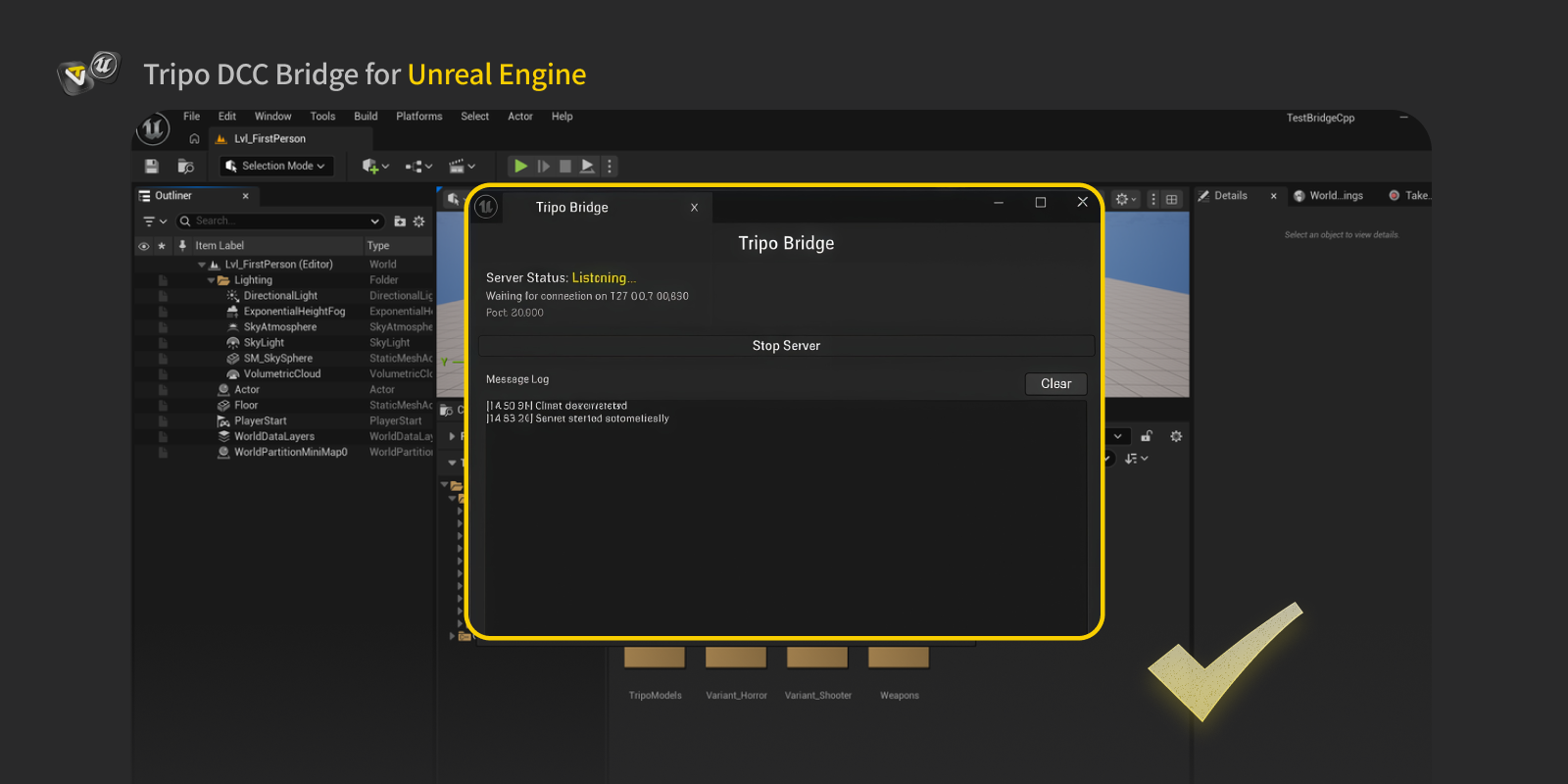
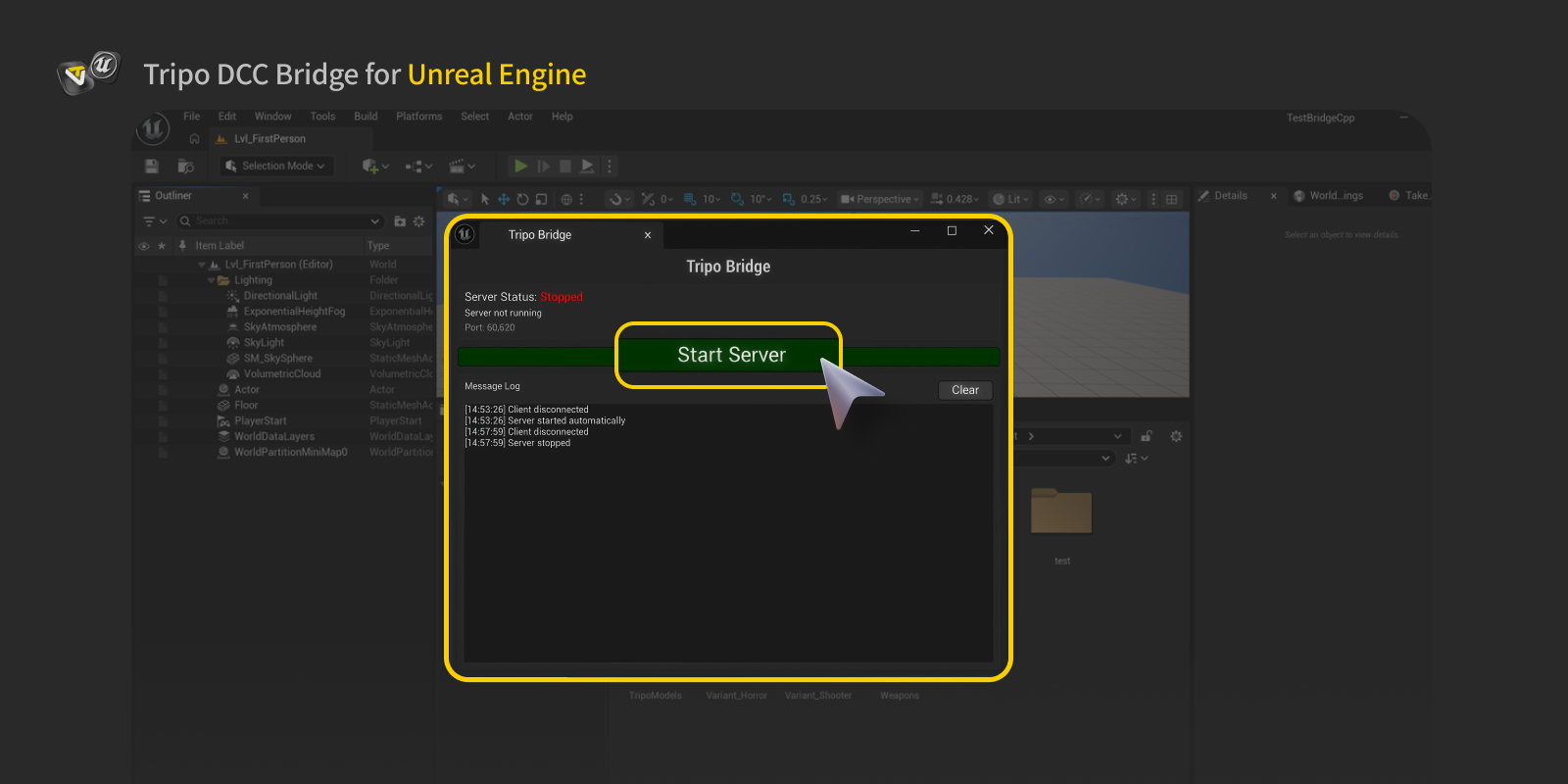
PS: If you need to manually stop the service, click Stop Server in the panel. However, to send or receive models from Tripo Studio, the service must be running. If it has been stopped, click Start Server before attempting a transfer.
Step 4:
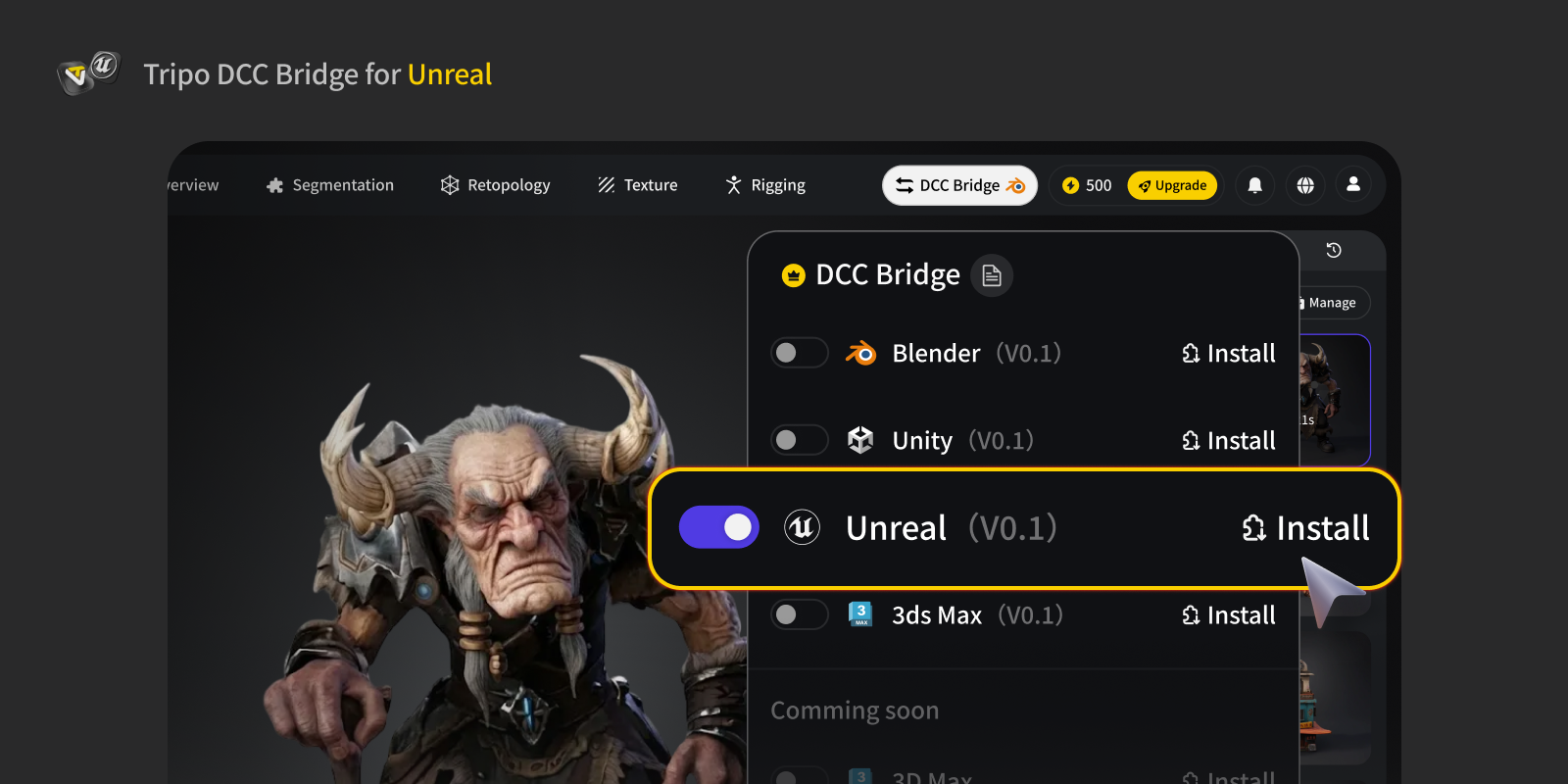
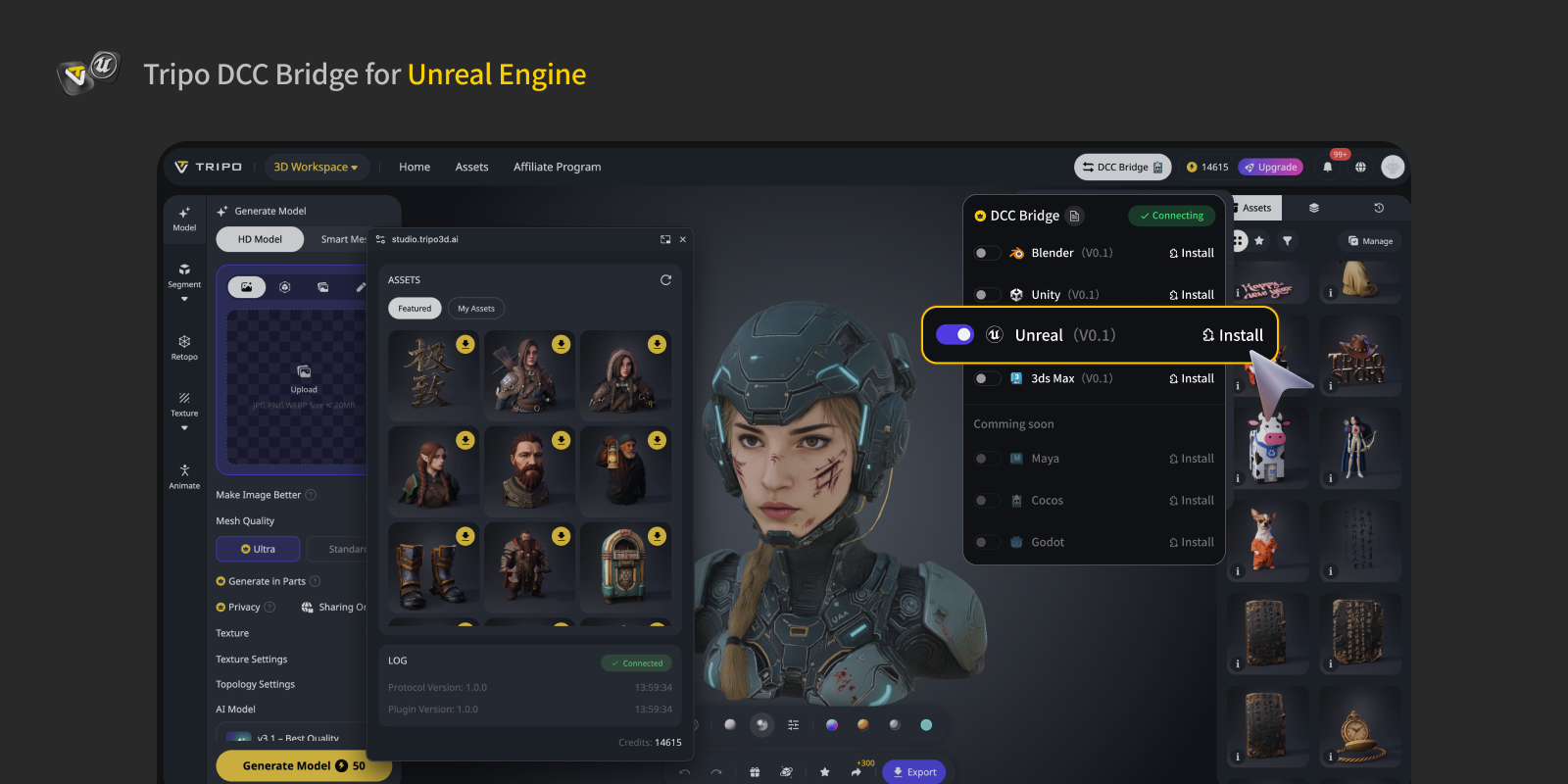
Open the Tripo Studio website, click the DCC Bridge button, and activate the Unity plugin.
Confirm the connection is set up correctly.
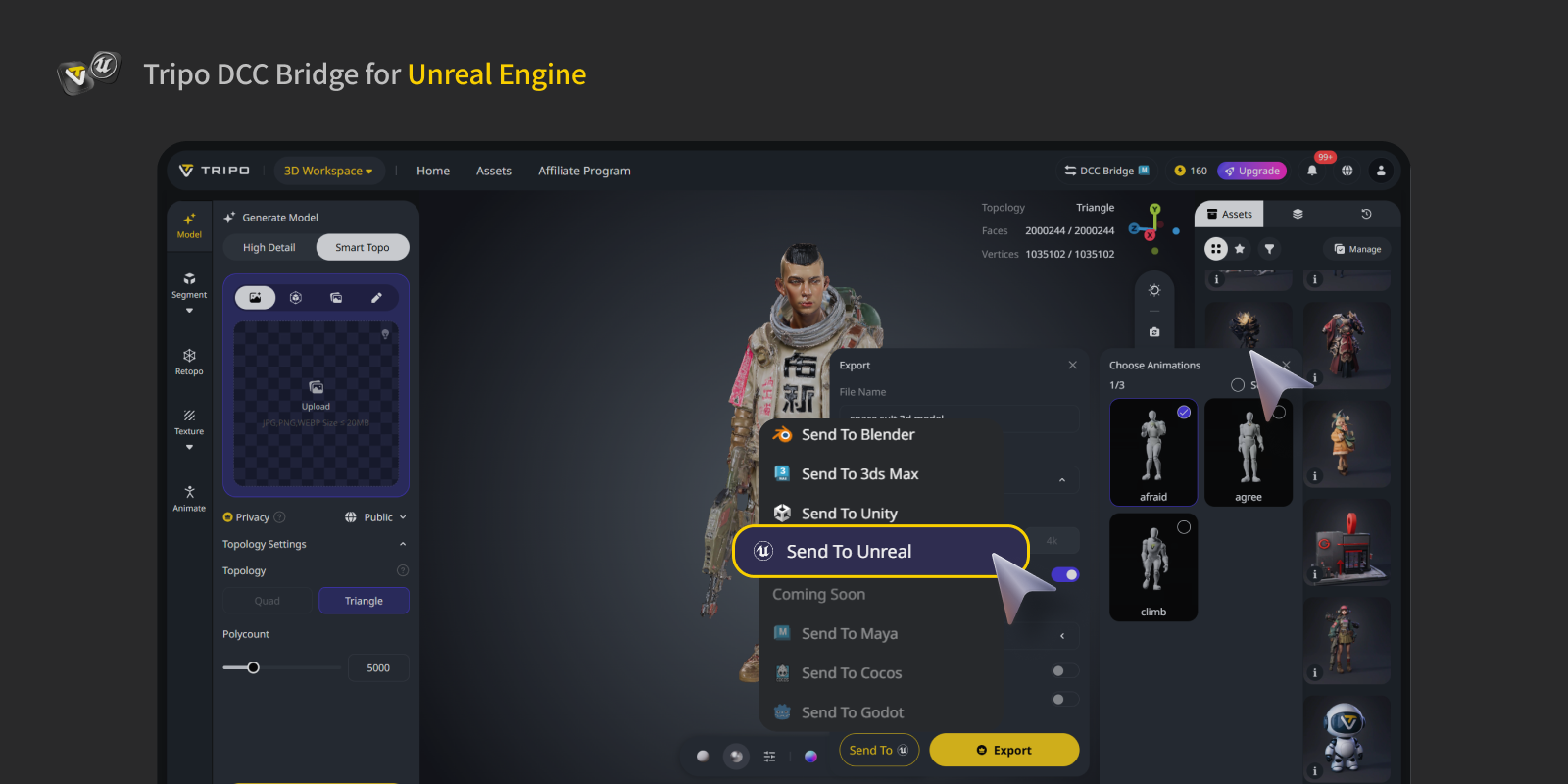
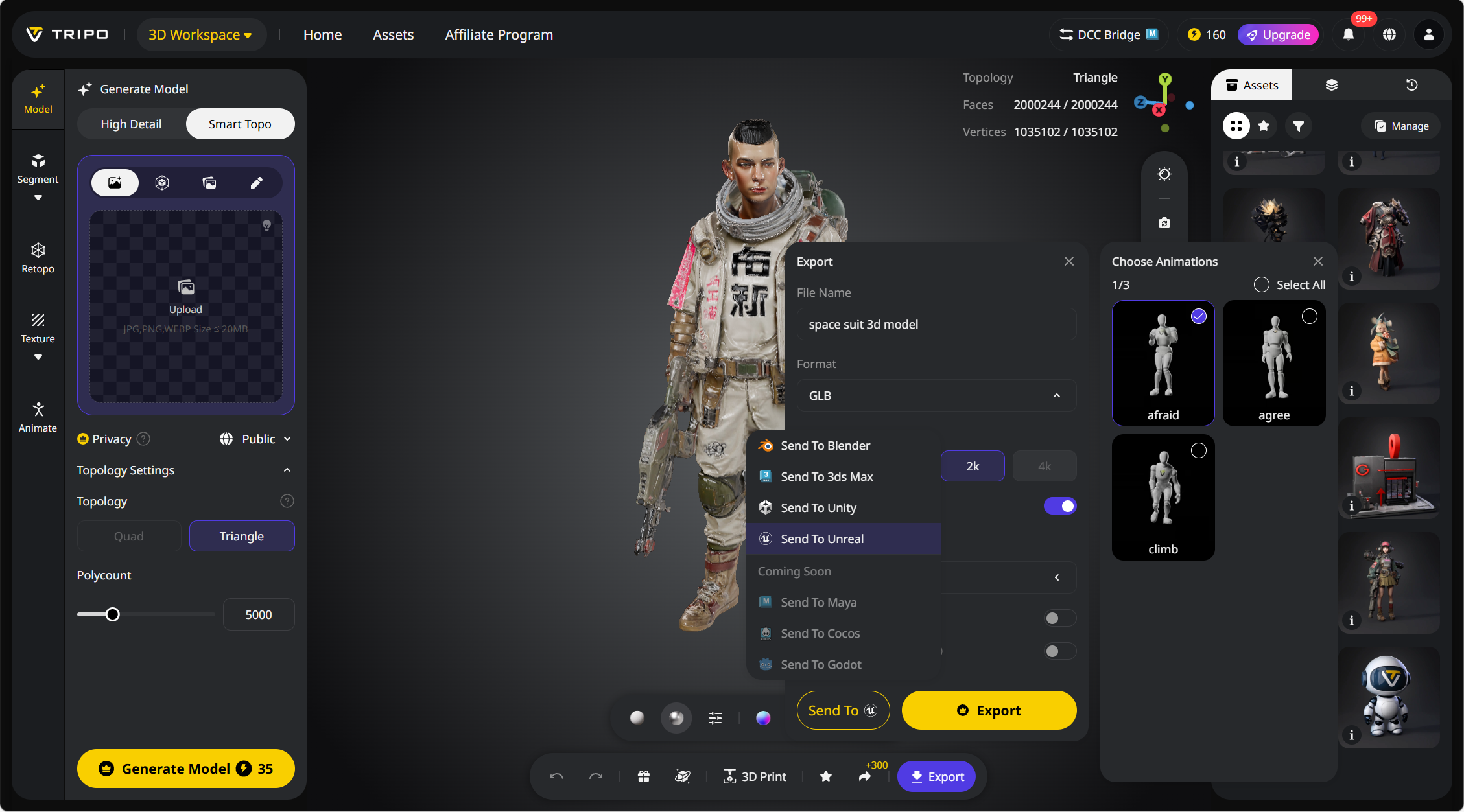
Select a model. Press the Export button in the mini window.
Click Send to Unreal
If Unreal Engine is still transferring, please wait until the transfer is complete before initiating another one.
If you want to export a model with animations, first generate the animations in Tripo Studio, then select the desired animations in the Export panel and send them directly to UE.
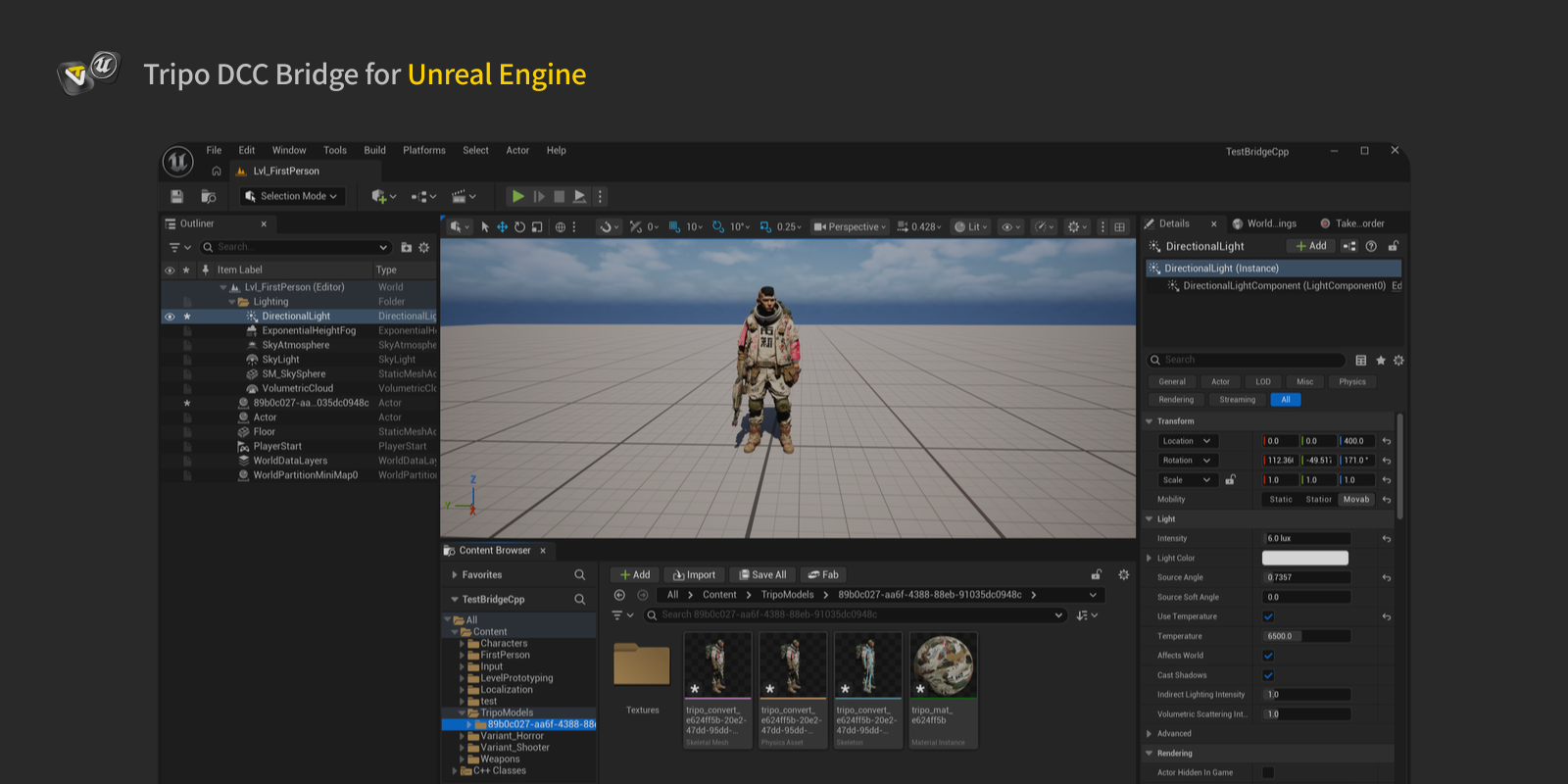
Step 5: You can now see the model in UE from the website.
FAQs
Q: What should I do if the plugin fails to compile?
A: This issue may be caused by using a mismatched engine version—for example, opening a UE5.6 project in UE5.7. In this case, you can try removing the Tripo plugin and reinstalling the version that matches your current engine. Alternatively, you can compile the plugin yourself using the provided source code to resolve compatibility issues.
Q: Can I transmit data to multiple UE instances simultaneously?
A: No. The connection only recognizes the first UE launched.
Q: Can I send models while UE is in Play mode?
A: Currently, model transfer is only supported in UE Editor mode.

Advancing 3D generation to new heights
moving at the speed of creativity, achieving the depths of imagination.
Advancing 3D generation to new heights
moving at the speed of creativity, achieving the depths of imagination.
Tripo DCC Bridge for Unreal Engine: Installation & Quick Start
Tripo3D Unreal Engine Bridge is a lightweight plugin that connects Unreal Engine directly to the Tripo Studio frontpage.
With this bridge, you can send generated models from the browser straight into your Unreal project in real time—no manual downloads or imports required. It streamlines the workflow for artists and game developers, allowing you to focus on scene building and gameplay instead of file handling.
Requirements
OS: Windows
Unreal Engine: 5.4 or newer UE 5.7+ is recommended.
Browser:
Supports Google Chrome 116+, Edge 116+, Opera 102+
Other browsers are not supported
Default Import Settings:
Pivot: Center Bottom
Texture Resolution: Current Maximum
Auto Material Creation: Enabled
Auto Asset Placement: Enabled
Step-by-Step Installation
Step 1:
Go to Tripo Studio and download the Tripo3D Unreal Engine Bridge package.
Step 2:
Extract the ZIP file.
Select the plugin version that matches your Unreal Engine version.
Copy the plugin folder into your Unreal project's Plugins directory.
If the Plugins folder does not exist, create one in the root of your project.
Step 3:
In Unreal Engine, open the Tripo Bridge panel via Window → Tripo Bridge.
Open the Bridge panel.
When the panel is opened, the Bridge service starts automatically.
The Bridge service must remain running while connecting to the web browser.
Do not close UE or the Bridge panel during model transfer.
PS: If you need to manually stop the service, click Stop Server in the panel. However, to send or receive models from Tripo Studio, the service must be running. If it has been stopped, click Start Server before attempting a transfer.
Step 4:
Open the Tripo Studio website, click the DCC Bridge button, and activate the Unity plugin.
Confirm the connection is set up correctly.
Select a model. Press the Export button in the mini window.
Click Send to Unreal
If Unreal Engine is still transferring, please wait until the transfer is complete before initiating another one.
If you want to export a model with animations, first generate the animations in Tripo Studio, then select the desired animations in the Export panel and send them directly to UE.
Step 5: You can now see the model in UE from the website.
FAQs
Q: What should I do if the plugin fails to compile?
A: This issue may be caused by using a mismatched engine version—for example, opening a UE5.6 project in UE5.7. In this case, you can try removing the Tripo plugin and reinstalling the version that matches your current engine. Alternatively, you can compile the plugin yourself using the provided source code to resolve compatibility issues.
Q: Can I transmit data to multiple UE instances simultaneously?
A: No. The connection only recognizes the first UE launched.
Q: Can I send models while UE is in Play mode?
A: Currently, model transfer is only supported in UE Editor mode.
Advancing 3D generation to new heights
moving at the speed of creativity, achieving the depths of imagination.
Advancing 3D generation to new heights
moving at the speed of creativity, achieving the depths of imagination.